Crab Stitch Edging: A Neat Corded Border for Blankets
Learn reverse single crochet, known as crab stitch, step by step: which direction to work, how to handle corners and how to fix tight, flat or uneven stitches on a blanket edge.
Tutorial at a glance
Materials
- A blanket with a round of single crochet around the edge
- Yarn in the same weight as the blanket
- Crochet hook used for the blanket and one a size larger
- Blunt yarn needle
- Scissors
Crab stitch edging puts a small twisted cord around the edge of a blanket. It is a single round, it uses the stitch you already know, and it finishes an edge more firmly than plain single crochet does.
The one unusual thing about it is direction. You work backward along the edge, and that takes a few stitches to get used to.
What Crab Stitch Is
Crab stitch is also called reverse single crochet. It is an ordinary single crochet (sc) worked in the opposite direction: from left to right if you crochet with your right hand, and from right to left if you crochet with your left hand.
Because the hook travels against its usual direction, each stitch twists over the one before it. The tops of the stitches do not form the familiar row of V shapes. They roll into a rounded, rope-like ridge that sits on the very edge of the fabric.
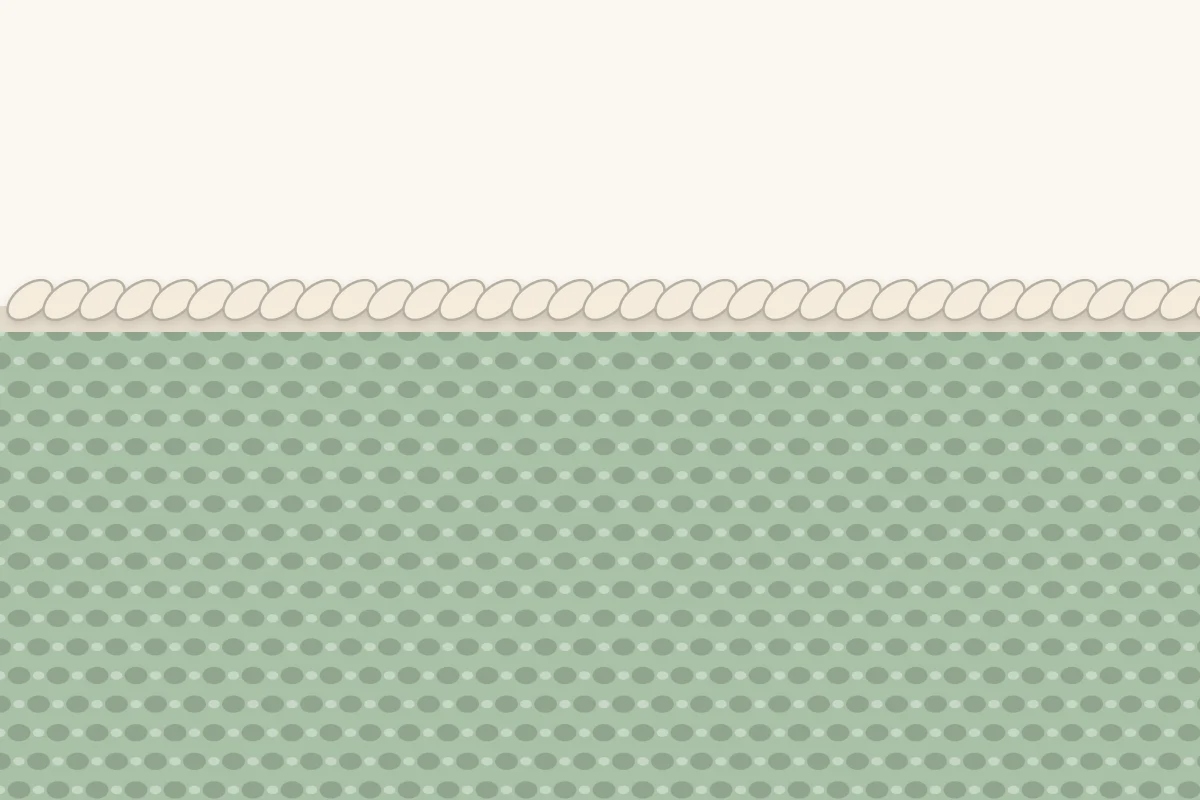
Crab stitch is a final round. The twisted tops leave no clear loops to work into, so nothing is crocheted on top of it.
What You Need
- The blanket, with its ends already woven in.
- Yarn in the same weight as the blanket, in a matching or contrasting color. Allow about as much as one round of single crochet takes, plus a little extra.
- The hook used for the blanket, for example US H-8 (5 mm) with worsted weight (#4 medium) yarn, and a hook one size larger in case your stitches come out tight.
- Blunt yarn needle and scissors.
Start With a Plain Single Crochet Round
Always work crab stitch over a round of plain single crochet, never straight into the raw edge of the blanket. The row-end sides of a blanket have no even stitches to work into, and a stitch made backward is hard enough to place without guessing where it goes.
Work one or two rounds of sc around the blanket, with 3 sc in each corner, as set out in the guide to a simple single crochet border. Join the last round with a slip stitch (sl st) in its first sc. Check that this round lies flat, because crab stitch will not correct it.
If the crab stitch will be a different color, fasten off and join the new yarn with a sl st in any stitch along a side, away from the corners.
How to Work Crab Stitch Step by Step
These steps are written for right-handed crocheters. If you crochet left-handed, swap every “right” for “left.”
- Do not turn. Keep the right side of the blanket facing you, exactly as it was for the foundation round.
- Chain 1. This chain gives the first stitch some height. It does not count as a stitch.
- Find the next stitch to the right. It is the stitch just behind your hook, the last sc you made in the foundation round.
- Insert the hook. Turn the tip of the hook downward and push it from front to back under both top loops of that stitch. Your hand will rotate a little toward you.
- Yarn over and pull up a loop. Catch the working yarn and draw it under the two top loops to the front. You now have 2 loops on the hook. Lift the new loop to the same height as the first.
- Yarn over and pull through both loops. One crab stitch is complete.
- Repeat. Move to the next stitch to the right and repeat steps 4 to 6 in each stitch.
Work one crab stitch in each sc of the foundation. The loop on the hook should cross over the stitch you just finished each time. That crossing is what makes the cord.
Tip
Practice on your gauge swatch first. Work a row of plain sc along its top edge, do not turn, and travel back across in crab stitch until the cord looks even.
Corners and Finishing the Round
At each corner, work 2 crab stitches in the middle sc of the corner. The extra stitch gives the cord enough length to travel around the point without pulling the corner in.
The last crab stitch of the round goes into the stitch where the foundation round was joined. If the foundation has 482 sc, you finish with 482 crab stitches plus 1 extra at each of the 4 corners, 486 in all.
To close the round, join with a sl st at the base of the first crab stitch. Cut the yarn, leaving a tail of about 6 in (15 cm), and pull it through. Weave the tail into the foundation round, not into the cord, following the guide to weaving in ends.
Common Problems and Fixes
The Stitches Are Too Tight
This is the most frequent complaint. A tight cord is hard to work, and it draws the edge in so the blanket cups. Go up one hook size for the crab stitch round, and pull the loop in step 5 up a little higher before you finish the stitch.
The Stitches Look Like Plain Single Crochet
If the edge shows flat V shapes with no twist, the stitches were not truly made backward. Check two things. You must not have turned the work, and the hook must go into the stitch to the right of the one just made. Also keep the hook tip pointing down as it enters the stitch. Rolling it upward mid-stitch untwists the loops.
The Corners Bunch or Pull
A corner that curls inward needs more length: make sure there are 2 crab stitches in the corner stitch. A corner that bulges has too many, which usually means extra stitches were also worked in the stitches on either side.
The Cord Is Uneven
Bumps of different sizes come from pulling up loops to different heights. Slow down and bring each loop up level with the one already on the hook. A light blocking afterward evens out small differences.
Why It Suits Blankets
Crab stitch makes an edge that is flat, firm and close to the fabric. It has no loops or openings, and it adds almost no width, so the blanket keeps the size you planned.
The twisted structure also stiffens the edge slightly. That helps a blanket in a soft, stretchy stitch hold its outline, and it gives a plain blanket, such as an easy single crochet baby blanket, a defined rim without any change of stitch pattern in the body.
If you want a border with more shape, a scalloped shell edging is worked over the same single crochet foundation.
Frequently asked questions
Is crab stitch the same as reverse single crochet?
Yes. They are two names for one stitch. Patterns written in US terms often abbreviate it as rsc or reverse sc. It is made with the same motions as single crochet, but each stitch is placed in the stitch behind the hook instead of the one ahead of it.
Can I add another round after crab stitch?
It is not practical. The twisted tops of the stitches do not leave clear loops to insert a hook into, so crab stitch is treated as the last round of an edging. Work any plain or decorative rounds you want first, and finish with crab stitch.
How many foundation rounds do I need under crab stitch?
One round of single crochet is enough to give even stitches to work into. Two rounds make a slightly wider frame and are useful when the foundation is in the blanket color and the cord is in a contrast, because the cord then sits clear of the blanket's row ends.