Scalloped Shell Edging for a Baby Blanket
A flat scalloped edging of five-stitch shells over single crochet, with a clear way to make each side a multiple of 6, corner shells, a checked example and a smaller three-stitch version.
Tutorial at a glance
Materials
- About 80-130 yd (73-119 m) of yarn for a 30 x 35 in (76 x 89 cm) blanket, an estimate that depends on gauge
- Crochet hook used for the blanket
- 4 stitch markers
- Blunt yarn needle
- Scissors
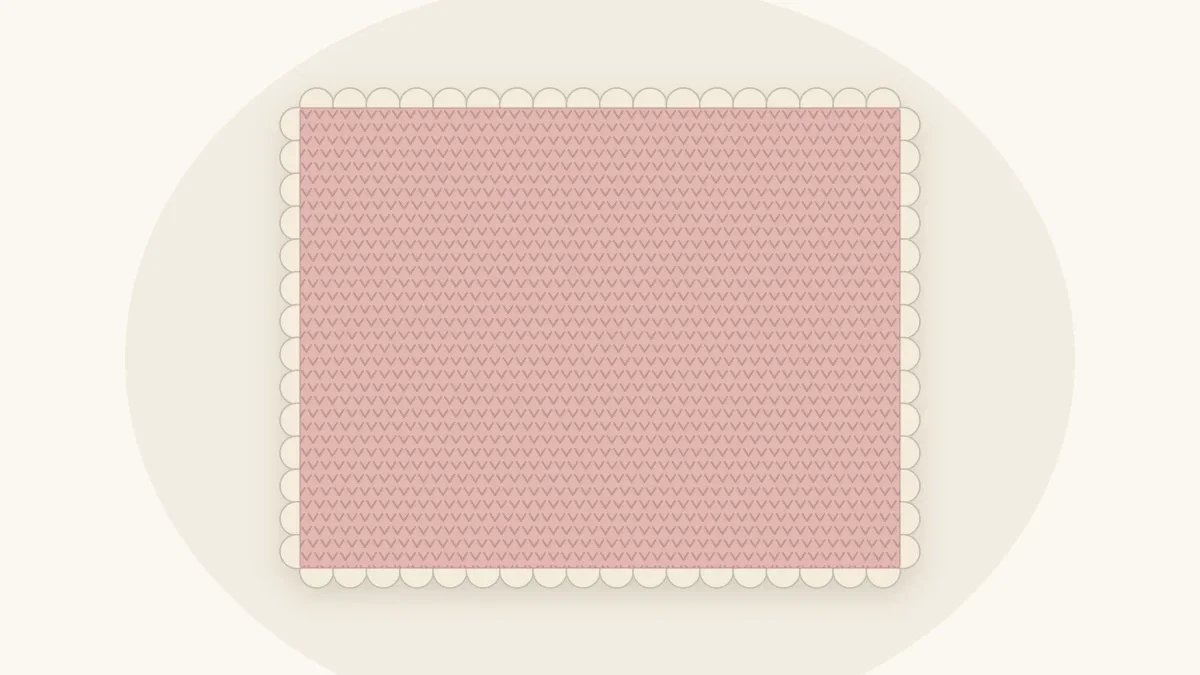
A scalloped shell edging is a row of small fans worked around the blanket: five double crochet stitches in one stitch, held down by a single crochet on each side. The stitches are simple. The part that needs care is the counting, because the shells only come out even when each side has the right number of stitches.
This pattern uses US crochet terms. It is worked over a foundation of single crochet rounds and stays flat against the blanket.
Materials
- Yarn in the same weight as the blanket. For a 30 x 35 in (76 x 89 cm) blanket in worsted weight (#4 medium), allow about 80-130 yd (73-119 m) for the foundation rounds and the shells. This is an estimate that depends on your gauge, so keep a little extra from the same dye lot.
- The hook used for the blanket, for example US H-8 (5 mm).
- 4 stitch markers.
- Blunt yarn needle and scissors.
Finished Size
With two foundation rounds and the shell round, the edging adds about 1 in (2.5 cm) to each edge in worsted weight yarn, or about 2 in (5 cm) to the width and to the length.
Gauge
Work the edging at the same tension as the blanket so the foundation rounds lie flat. Matching that tension matters for the depth of the edging and for the amount of yarn it takes.
Abbreviations
- ch = chain
- sc = single crochet
- dc = double crochet
- sl st = slip stitch
- sk = skip
- st(s) = stitch(es)
- shell = 5 dc in the same stitch
Pattern Notes
- Work in rounds with the right side facing. Do not turn.
- The ch 1 at the start of a round does not count as a stitch.
- One repeat is: sk 2, 5 dc in next st, sk 2, sc in next st. It uses 6 stitches of the foundation.
- Each corner gets a larger shell of 7 dc, worked in the marked corner stitch.
Making the Stitch Count Fit
A corner stitch is the middle sc of the 3 sc worked in a corner. Count each side this way: start with the corner stitch itself and count every stitch up to, but not including, the next corner stitch. That number has to be a multiple of 6.
The check for a side of 96 stitches: 96 = 6 x 16. The corner stitch holds the 7-dc shell. The other 95 stitches are used as sk 2 and 1 sc (3 stitches), then 15 full repeats (15 x 6 = 90 stitches), then sk 2 before the next corner (2 stitches). 3 + 90 + 2 = 95. The side ends up with 16 sc and 15 shells, plus its corner shell.
Few blankets give a multiple of 6 by chance, so use the second foundation round to adjust. Each side of a plain sc round has 2 more stitches than the same side of the round before, because of the corner increases. Count the sides of Foundation Round 1, add 2 to each, and compare with the nearest multiple of 6:
- A side of 94 becomes 96 with no changes.
- A side of 98 would become 100. The nearest multiple is 102, so add 2 stitches by working 2 sc in one stitch at two places on that side.
- A side of 95 would become 97. The nearest multiple is 96, so skip 1 stitch on that side.
Spread the added or skipped stitches along the side and keep them away from the corners.
Instructions
Foundation Round 1: Work one round of sc around the blanket with 3 sc in each corner, as described for the simple single crochet border. Join with a sl st in the first sc. Mark the middle sc of each corner and count the sides.
Foundation Round 2: Ch 1, sc in the same st as the join and in each st around, working 3 sc in each marked corner st and making the adjustments you worked out. Join with a sl st in the first sc. Move each marker to the new middle sc and count every side again. Fasten off if you are changing color for the shells.
Shell Round: Join the yarn with a sl st in the third stitch after any marked corner st. Ch 1, sc in the same st. *[Sk 2 sts, 5 dc in next st, sk 2 sts, sc in next st] repeat until 2 sts remain before the next marked corner st. Sk 2 sts, 7 dc in the corner st, sk 2 sts, sc in next st. Repeat from * around. After the fourth corner shell, sk 2 sts and join with a sl st in the first sc. Fasten off.
Each time you reach “2 sts remain before the corner,” the stitch you have just made should be a sc. If it is not, the count on that side is off; recount before going further.
Smaller Shells of 3 Double Crochet
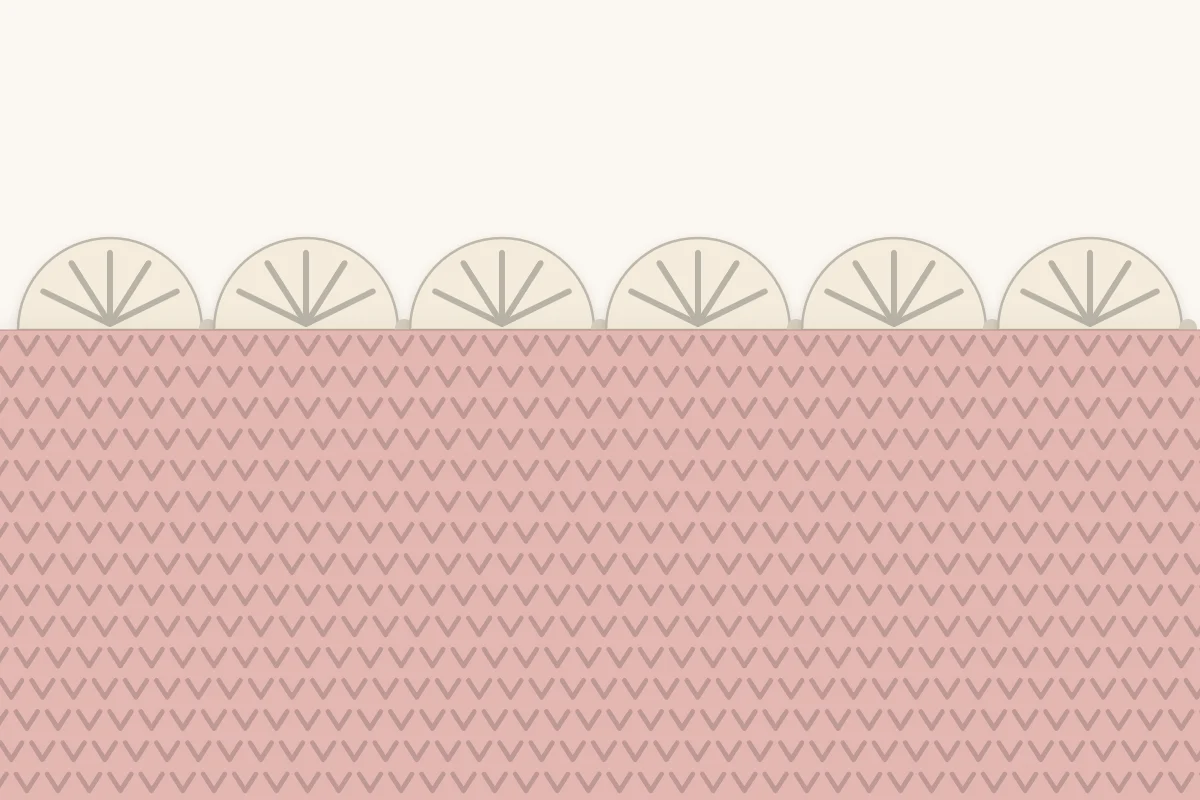
For a narrower edging on a small blanket or with thick yarn, use shells of 3 dc. The repeat is: sk 1, 3 dc in next st, sk 1, sc in next st. It uses 4 stitches, so each side, counted the same way, has to be a multiple of 4. Work 5 dc in each corner stitch.
Start with a sc in the second stitch after a marked corner stitch. Repeat [sk 1 st, 3 dc in next st, sk 1 st, sc in next st] until 1 stitch remains before the corner, sk 1 st, 5 dc in the corner st, sk 1 st, sc in next st.
The check for a side of 96 stitches: 96 = 4 x 24. Past the corner stitch, sk 1 and 1 sc use 2 stitches, 23 full repeats use 92, and the last sk 1 uses 1. 2 + 92 + 1 = 95.
Finishing and Blocking
Weave each tail into the foundation rounds, where the fabric is densest, following the method in the guide to weaving in ends.
Fresh shells tend to curl forward. Blocking opens them into even curves: pin each corner first, then set a pin at the center dc of each shell. Use the method that suits the fiber content on the yarn label, as explained in how to block a crochet blanket, and count the pins as you remove them.
The edging is complete as it is: a flat row of scallops with nothing added. For a firmer, plainer finish, the crab stitch edging is worked over the same sc foundation.
Frequently asked questions
Why do my shells not meet evenly at the end of the round?
The total number of foundation stitches does not match the repeat. Each side, counted from one corner stitch up to the next, has to divide by 6 for five-stitch shells. Pull out the shell round, correct the count in a single crochet round, and work the shells again.
Can I work shells directly into the blanket edge without a foundation round?
It is possible along the top edge, but the row-end sides have no clear stitches to count or skip, so the shells drift in size. One or two rounds of single crochet give every side a countable base and make the spacing even all the way around.
Should the edging be the same color as the blanket?
Either works. A matching color gives a quiet, shaped edge and hides small differences between shells. A contrasting color makes the scallops stand out and shows every stitch, so count carefully. Working the foundation rounds in the blanket color and only the shells in the contrast is a common middle route.