How to Crochet a Baby Blanket: A Beginner’s Step-by-Step Guide
Follow the whole process of crocheting a baby blanket in order, from choosing a size and yarn to the gauge swatch, rows, border and blocking, with a compact first-blanket recipe.
Tutorial at a glance
Materials
- Worsted weight (#4 medium) yarn, about 900-1,100 yd (estimate)
- US H-8 (5 mm) crochet hook
- Small scissors
- Blunt yarn needle
- Tape measure
- Locking stitch markers
A baby blanket is a rectangle made of rows, and every row uses the same few motions. If you want to learn how to crochet a baby blanket, you need one stitch, one hook, a few balls of yarn and the habit of counting. What you practice in the first ten rows carries through to the last one.
The stages below follow the order you will work in, from choosing a size to drying the finished blanket. Each one is kept short, with a link to a longer guide where a topic needs more room. A compact recipe for a first blanket sits near the end.
Choose a Size and Gather Your Supplies
A common first project measures about 30 x 35 in (76 x 89 cm), a size many patterns call a stroller blanket. Size names are conventions that vary from pattern to pattern. This one is small enough to finish and large enough to give you real practice.
For yarn, a worsted weight (#4 medium) in a light, solid color makes the stitches easy to see. The label lists the fiber content, the care instructions and a suggested hook size, and the guide to choosing yarn for a baby blanket explains how to read it. A US H-8 (5 mm) hook suits most worsted yarns.
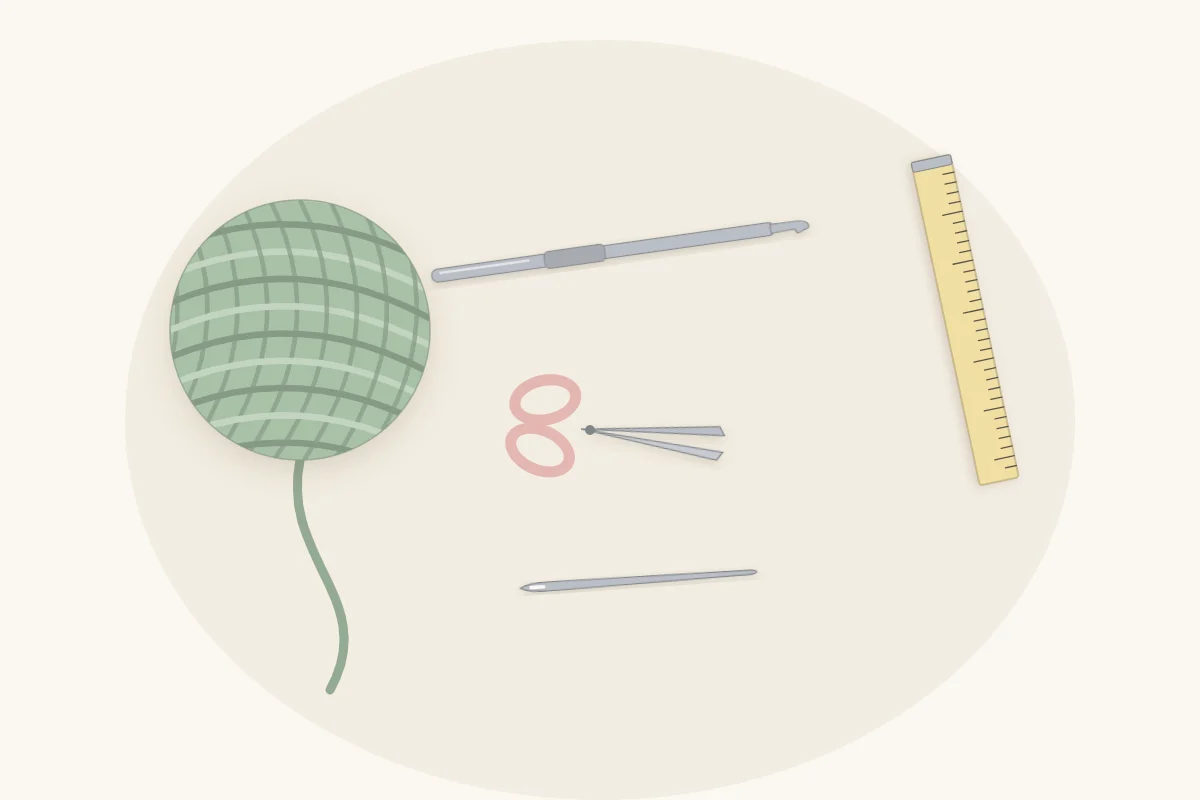
You also need small scissors, a blunt yarn needle for the tails, a tape measure and a few locking stitch markers.
Watch out
This site covers crochet technique only. The American Academy of Pediatrics advises keeping loose blankets and other soft bedding out of an infant’s sleep space; for questions about using a blanket with a baby, follow your pediatrician’s guidance.
Make a Gauge Swatch
Gauge is the number of stitches and rows that fit in 4 in (10 cm). It depends on your yarn, your hook and how tightly you hold the yarn, so two people following the same pattern can end up with different sizes.
Crochet a square about 6 in (15 cm) wide in the stitch you plan to use, then lay it flat and count the stitches across 4 in in the middle. More stitches than the target means your fabric is tight, so try a larger hook. Fewer stitches means it is loose, so try a smaller one. The guide to measuring crochet gauge covers the details.
Start With a Foundation Chain
Every flat blanket begins with a slip knot and a row of chain stitches called the foundation chain. Its length sets the width of the blanket. The number of chains equals the number of stitches you want plus a small extra for turning: 1 more for single or half double crochet, 2 more for double crochet.
Keep the chains loose and even. A chain that is tighter than the rows above it pulls the bottom edge into a curve. Many crocheters make the chain with a hook one size larger, then switch back for the first row.
Work Rows in One Stitch
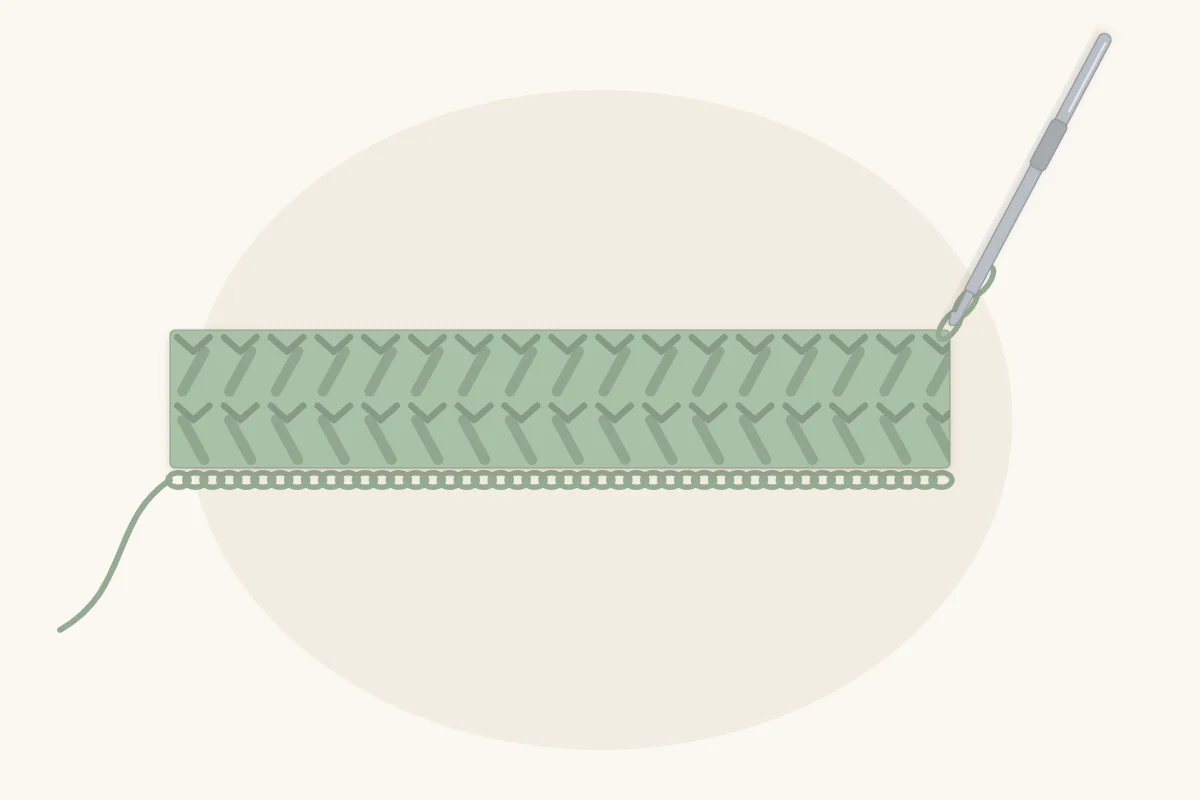
A first blanket works well in a single basic stitch. At the end of every row you make a short turning chain to lift the yarn to the height of the next row, turn the work and crochet back across.
| Stitch | Height | Fabric | Usual turning chain |
|---|---|---|---|
| Single crochet (sc) | Shortest | Dense and firm | Ch 1, not counted as a stitch |
| Half double crochet (hdc) | Medium | Soft, moderately dense | Ch 1, not counted as a stitch |
| Double crochet (dc) | Tallest | More open, with more drape | Ch 3, counted as a stitch |
Taller stitches build length faster. Shorter stitches make a thicker fabric with smaller gaps and take more rows to reach the same length.
Keep the Edges Straight
Blanket edges wander for one reason: the stitch count changes. A stitch is skipped at the start of a row or missed at the end, and the fabric narrows. An extra stitch slips in, and it widens.
Place a stitch marker in the first stitch of each row as soon as you make it. When you come back across, that marker shows you where the last stitch belongs. Count the whole row every five rows or so. If the number is off, pull the work back to the row where it changed, because a lost stitch does not correct itself.
A First Blanket Recipe
This recipe uses US crochet terms and makes a blanket about 30 x 35 in (76 x 89 cm) before any border.
- Yarn: worsted weight (#4 medium), about 900-1,100 yd. This is an estimate that depends on your gauge, so buy a little extra from the same dye lot.
- Hook: US H-8 (5 mm).
- Gauge target: 13 hdc and 10 rows = 4 in (10 cm).
- Foundation: ch 99.
- Row 1: hdc in the 2nd ch from the hook and in each ch across. You have 98 hdc.
- Row 2 and every row after: ch 1 (does not count as a stitch), turn, hdc in each stitch across. You still have 98 hdc.
- Length: repeat Row 2 until the blanket measures 35 in (89 cm), about 88 rows.
The numbers come from the gauge. Thirteen stitches over 4 in is 3.25 stitches per inch, and 3.25 x 30 in = 97.5, rounded up to 98 stitches. One extra chain for the turn makes 99. For stitch-by-stitch help, follow the full half double crochet baby blanket pattern.
Fasten Off and Weave In Ends
After the last stitch, cut the yarn and leave a tail about 6 in (15 cm) long. Pull the tail through the loop on your hook and tug it snug. That closes the final stitch.
Thread each tail onto the blunt needle and run it through the back of the stitches in several directions before trimming it. A blanket gets washed often, so secure tails matter for durability. The steps are in the guide to weaving in ends.
Add a Border and Block
A round of single crochet around all four sides covers uneven row ends and gives the blanket a firm frame. Work 3 stitches into each corner so it lies flat. The tutorial for a simple single crochet border explains how to space stitches along the sides. Borders on this site stay flat and close to the fabric, with nothing attached.
Blocking is the last step. Wash or dampen the blanket as the yarn label allows, lay it flat, shape it to its measurements and let it dry completely. The stitches even out and the corners square up.
Frequently asked questions
Which crochet stitch is easiest for a first baby blanket?
Single, half double and double crochet are all suitable for a first blanket. Half double crochet is a frequent choice because it has only one extra step compared with single crochet, yet each row adds more length. Pick one stitch and stay with it for the whole blanket so your hands can settle into a rhythm.
Do I need to follow a written pattern to make a simple blanket?
No. A plain blanket only needs a stitch count for the width and a target length. Once a gauge swatch tells you how many stitches fit in an inch, you can multiply by the width you want, add the turning extra and repeat one row until the blanket is long enough.
What should I do if I run out of yarn before the blanket is long enough?
Take the yarn label with you and look for the same color with the same dye lot number, because lots can differ slightly in shade. If the lot is gone, you can finish with a planned stripe or a border in a second color so the change looks intentional rather than accidental.