Lightweight Summer Baby Blanket in V-Stitch
A full V-stitch pattern for a thin, open baby blanket in DK cotton, with the gauge target, the chain arithmetic and a one-row repeat that keeps the same count on every row.
Tutorial at a glance
Materials
- DK weight (#3 light) cotton or cotton-blend yarn, about 750-950 yd
- US G-6 (4 mm) crochet hook
- Blunt yarn needle
- Scissors
- Tape measure
- Two stitch markers (optional)
A lightweight summer baby blanket comes from two choices made together: a thinner yarn and a stitch with air in it. This pattern pairs DK cotton with the V-stitch, a one-row repeat built from double crochet and single chains. The result is a thin, open fabric that folds small and hangs loosely instead of standing stiff.
If you can chain and double crochet, you already know every movement in it. The pattern is written in US crochet terms.
Why V-Stitch and DK Cotton Make a Lighter Fabric
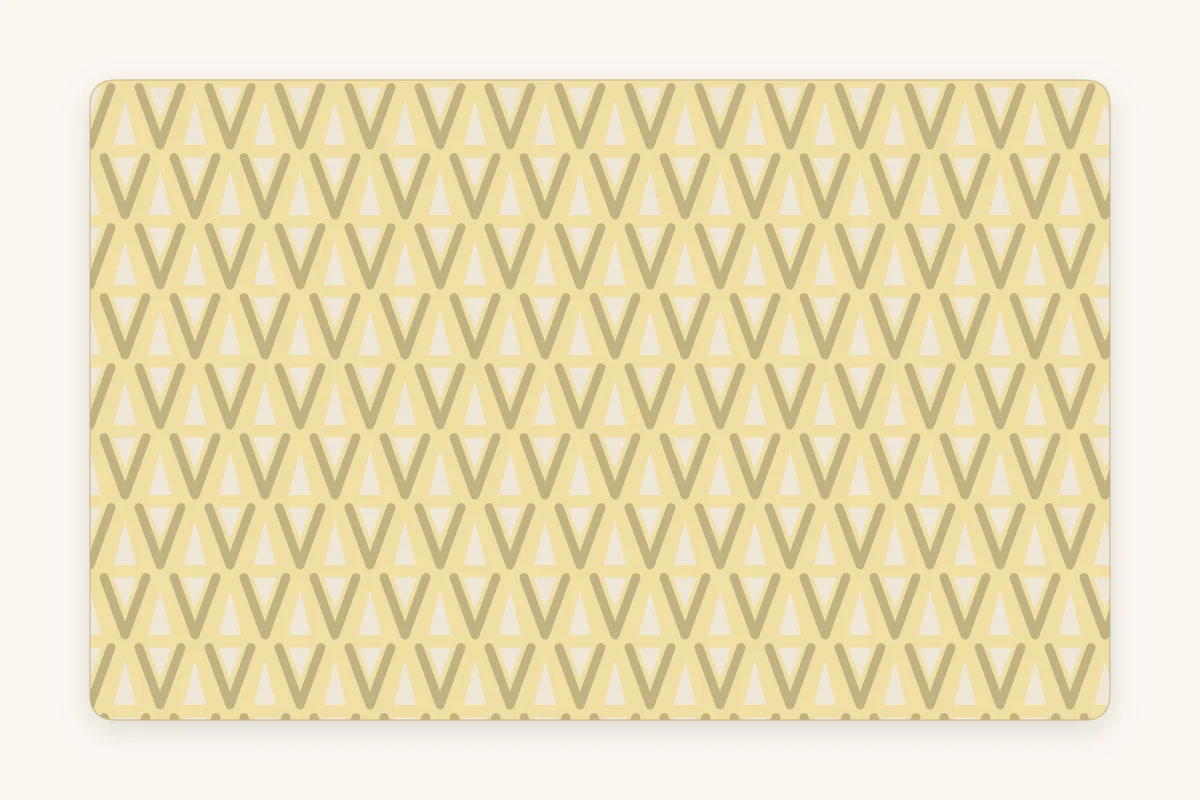
A V-stitch is two double crochets separated by one chain, all worked into the same place. Each group fans out into a V shape, and the next group sits two stitches away, so every row is a line of small openings. Less yarn fills each square inch than in solid rows of double crochet, and that is what makes the fabric lighter and more flexible.
DK yarn (#3 light) is thinner than the worsted weight used for most first blankets, so the fabric is thinner too. Cotton adds a different quality. Yard for yard it weighs more than acrylic and has very little stretch, so it hangs straight down and shows each stitch crisply. A cotton-acrylic blend is a little lighter and springier. “Lightweight” here describes the fabric only. For fiber content and washing instructions, read the label, and see the guide to choosing yarn for a baby blanket for the trade-offs between fibers.
Materials
- DK weight (#3 light) cotton or cotton-blend yarn, about 750-950 yd (690-870 m)
- US G-6 (4 mm) crochet hook, or US 7 (4.5 mm) if you need it to match gauge
- Blunt yarn needle
- Scissors and a tape measure
- Two stitch markers (optional)
The yarn amount is an estimate. It depends on your gauge, the fiber and the border you add, so buy a little extra from the same dye lot.
Finished Size
About 30 x 34 in (76 x 86 cm) before the border. A simple border adds roughly 1 in (2.5 cm) to each measurement.
Gauge
6 V-stitches and 9 rows = 4 in (10 cm), measured flat in the pattern stitch. Matching this target matters for the finished size and for how much yarn the blanket uses.
For a swatch, chain 31 and work the pattern for 14 rows. That gives 9 V-stitches, a piece about 6 in (15 cm) wide. Measure across the middle, away from the edges. If you count more than 6 V-stitches in 4 in, switch to the larger hook. If you count fewer, go down a size. The article on measuring crochet gauge covers the method in detail.
The starting chain follows from the gauge. Six V-stitches in 4 in is 1.5 V-stitches per inch, and 1.5 x 30 in = 45 V-stitches. Each V-stitch needs 3 chains, so 45 x 3 = 135, plus 4 extra chains for the edges and the turn: 139 chains.
Abbreviations
- ch – chain
- dc – double crochet
- sk – skip
- sp – space
- st(s) – stitch(es)
- V-st – V-stitch: (dc, ch 1, dc) all in the same chain or space
Pattern Notes
- The starting chain is a multiple of 3, plus 4. To change the width, add or remove chains in groups of 3. Each group adds or removes one V-stitch, about 2/3 in (1.7 cm) at the stated gauge.
- The turning ch-3 counts as a double crochet. Every row begins with that chain and ends with a double crochet worked into the top of the previous row’s turning chain.
- From Row 2 on, each V-stitch goes into the ch-1 space at the center of the V-stitch below, not into a stitch. Insert the hook under the chain, into the gap.
- Every row has 45 V-stitches plus one edge double crochet at each end.
Instructions
Chain 139 loosely. If your chain tends to come out tighter than your stitches, make it with a hook one size larger and then change back.
Row 1: V-st in the 5th ch from the hook (the 4 skipped chains count as the first dc and its base). *Sk 2 ch, V-st in next ch; repeat from * across until 2 chains remain. Sk 1 ch, dc in the last ch. (45 V-sts and 2 edge dc)
Row 2: Ch 3 (counts as first dc), turn. V-st in the ch-1 sp of each V-st across. Dc in the top of the turning chain. (45 V-sts and 2 edge dc)
Rows 3-76: Repeat Row 2, or continue until the piece measures about 34 in (86 cm) from the starting chain.
Fasten off, leaving a 6 in (15 cm) tail.
Check the Count on a Small Sample
The swatch chain of 31 makes the logic easy to follow. Skip 4 chains and place the first V-stitch in chain 5. Skipping 2 chains each time, the next V-stitches land in chains 8, 11, 14, 17, 20, 23, 26 and 29, which makes 9. Two chains are left: skip chain 30 and work a double crochet in chain 31.
Row 2 starts with ch 3 standing over that last double crochet, puts one V-stitch into each of the 9 spaces, and finishes with a double crochet in the top of the skipped chains from Row 1. Row 3 does the same over Row 2. Each row holds 9 V-stitches and 2 edge stitches.
Tip
Count V-stitches at the end of every few rows. Losing one almost always happens at the end of a row, when the last double crochet goes into the gap beside the turning chain instead of into the chain itself. A stitch marker in the top of each turning chain helps.
Finishing
Thread each tail onto the yarn needle and run it along the stitch posts and through the base of the V-stitches rather than across the open gaps, where it would show. Cotton is smooth and tails can work loose, so change direction at least twice before trimming. The guide to weaving in ends explains how to lock a tail in open fabric.
A flat edge firms up the sides. Work one round of single crochet around the blanket: along the top, one stitch in each double crochet and one in each ch-1 space, and along the sides about 2 stitches for each row end, with 3 stitches in each corner. Adjust the side count if the edge ruffles or pulls in. The full method is in the article on a simple single crochet border.
Pinning the damp blanket to its measurements opens the Vs evenly and straightens the edges. Follow the care label, and see how to block a crochet blanket for the steps. After the first wash, check for any tail that has worked loose.
Frequently asked questions
Can I make this V-stitch blanket with worsted weight yarn instead of DK?
Yes. The stitch works in any yarn weight, but the fabric will be thicker and each V-stitch wider. Use the hook size on the yarn label, make a swatch, count V-stitches per inch, and recalculate the chain as a multiple of 3 plus 4. Expect the yardage to change as well.
Why is one side of my V-stitch blanket getting narrower?
A row is losing its final stitch. The double crochet that ends each row belongs in the top of the turning chain from the row before, which is easy to miss because it leans away from the last V-stitch. Mark that chain when you make it and count the V-stitches whenever the edge looks uneven.
Does a V-stitch blanket need a border?
It is optional, but the row ends of V-stitch are a mix of chains and stitch posts, so the sides can look uneven without one. A round or two of single crochet gives all four edges the same firm, flat finish and covers the tails woven in along the sides.