Crochet Baby Blanket Sizes: A Practical Size Chart
A chart of commonly used baby blanket sizes in inches and centimeters, with a way to choose a size by purpose and resize any crochet pattern using your own gauge.
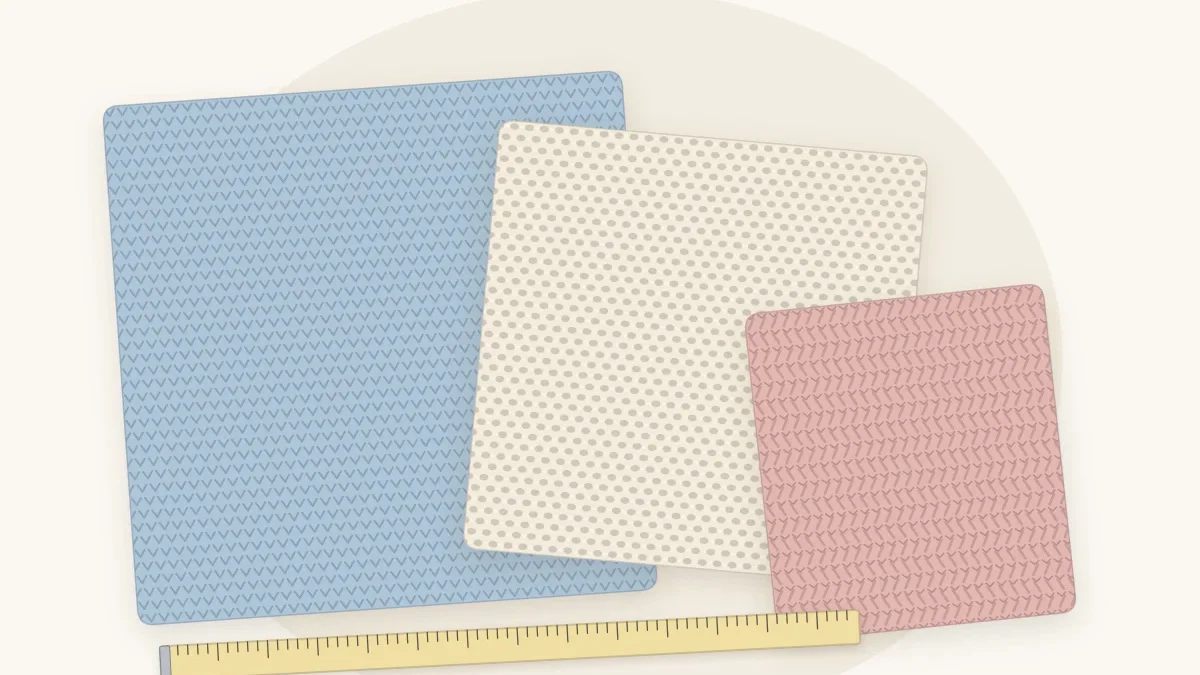
Crochet baby blanket sizes are looser than pattern listings make them look. Names such as “receiving” or “stroller” are trade names that designers apply in their own way, and two patterns with the same label can differ by several inches.
The chart below lists commonly used approximate sizes in inches and centimeters. After it comes a way to pick a size for your project and a method for resizing any pattern with your own gauge.
Common Baby Blanket Sizes
Treat every number here as “about.” These are conventions that vary between pattern designers, not official standards, and no rule says a blanket has to match one of them.
| Name | Approximate size (in) | Approximate size (cm) | Shape |
|---|---|---|---|
| Lovey | 12 x 12 | 30 x 30 | Small square |
| Security | 14 x 17 | 36 x 43 | Small rectangle |
| Stroller | 30 x 35 | 76 x 89 | Rectangle |
| Receiving | 36 x 36 to 40 x 40 | 91 x 91 to 102 x 102 | Square |
| Crib-size | 36 x 52 | 91 x 132 | Long rectangle |
| Toddler | 42 x 52 | 107 x 132 | Large rectangle |
The centimeter figures are rounded to the nearest whole number. A blanket that lands an inch or two away from any row of the chart is a normal result for handmade fabric.
What the Size Names Mean
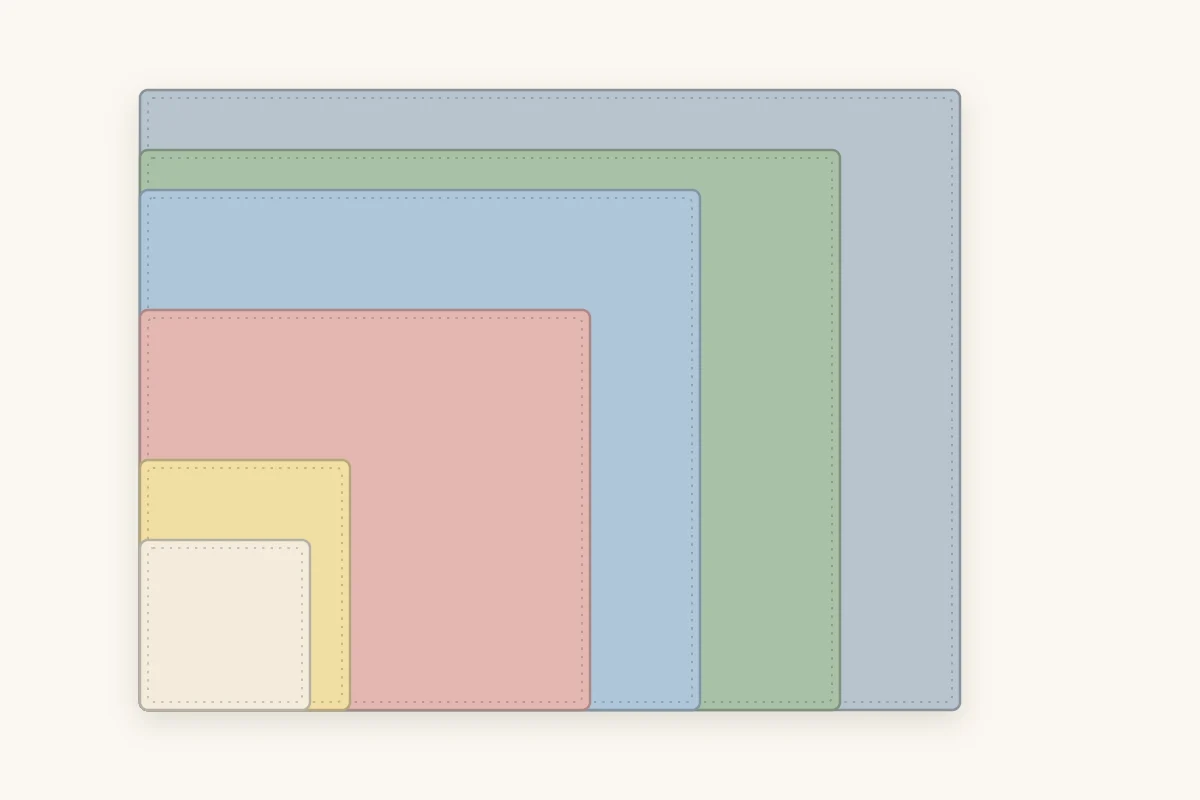
The names grew out of the way shops and pattern writers sort their products. A lovey is a very small square, and it makes a useful practice project because it takes little yarn. A security blanket is a slightly larger rectangle. Stroller and receiving blankets form the mid-sized group that most beginner patterns fall into. Crib-size and toddler blankets are the long rectangles that take the most yarn and the most rows.
All of these are trade names that describe dimensions. They are not usage advice. A label such as “crib-size” only tells you the blanket is about as large as that rectangle.
Watch out
This site covers crochet technique only. The American Academy of Pediatrics advises keeping loose blankets and other soft bedding out of an infant’s sleep space; for questions about using a blanket with a baby, follow your pediatrician’s guidance.
How to Choose a Size by Purpose
Start with what the blanket is for and how many hours you want to put into it.
- A gift keepsake: a receiving-size square of 36 to 40 in (91 to 102 cm) gives a stitch pattern room to show and folds neatly for wrapping.
- A blanket for outings: the stroller size, about 30 x 35 in (76 x 89 cm), is compact, folds into a bag and is the quickest mid-sized option to finish.
- A play mat for the floor: a larger square or a toddler-size rectangle gives more surface, and a dense stitch such as single crochet makes a thicker, flatter fabric.
- A first project: a lovey or a stroller-size blanket keeps the stitch count manageable while you learn to keep the edges straight.
If the blanket is a gift, the family may already have a size in mind, so it is worth asking before you make the first chain.
Square or Rectangle
A square is the simplest shape to plan. Blankets worked in rounds, such as a giant granny square, come out square by default, and you stop when the sides reach the measurement you want.
A rectangle worked in rows gives you two separate decisions. The starting chain sets the width, and the number of rows sets the length. That makes a rectangle forgiving: if you run short of yarn, you can stop a few inches early and the blanket still looks planned.
How a Border Adds to the Size
A border runs around all four edges, so it adds to each dimension twice. A border 1 in (2.5 cm) deep turns a 30 x 35 in (76 x 89 cm) blanket into a 32 x 37 in (81 x 94 cm) blanket.
Plan for it at the start. If the finished blanket should measure 36 in (91 cm) across and you want a 1 in border, make the body 34 in (86 cm) wide. A simple single crochet border of two or three rounds usually adds about 1/2 to 3/4 in (1.3 to 1.9 cm) per edge in worsted weight yarn, depending on your tension and hook.
How to Adjust Any Pattern to a Size
Gauge is the number of stitches and rows in a measured piece of fabric, usually 4 in (10 cm). With it you can turn any target size into a stitch count.
- Crochet a swatch in the pattern stitch with the yarn and hook you plan to use, then measure it as described in the guide to crochet gauge for blankets.
- Divide by 4 to get stitches per inch and rows per inch. A swatch with 14 stitches and 10 rows over 4 in has 3.5 stitches and 2.5 rows per inch.
- Multiply by the target width: 36 in x 3.5 = 126 stitches.
- Multiply by the target length: 36 in x 2.5 = 90 rows. Measuring the length as you go is more reliable than counting rows, because row height shifts more than stitch width over a long project.
- Round the stitch count to fit the pattern’s multiple if it has one, then add the turning chains. The steps are in the guide to how many chains to start a baby blanket.
The same arithmetic works in reverse. If a pattern starts with 105 stitches and your gauge is 3.5 stitches per inch, the blanket will be 105 / 3.5 = 30 in (76 cm) wide. Checking this before you begin tells you whether to change hook size or change the stitch count.
Size, Yarn and Time
Yarn use follows area, not width. A 30 x 35 in blanket covers 1,050 square inches. A 36 x 52 in blanket covers 1,872 square inches, which is nearly 80 percent more fabric for a blanket that is only 6 in wider.
At the other end, a 12 x 12 in lovey covers 144 square inches, less than one seventh of the stroller size. That difference is why a small size suits a first attempt at a new stitch.
Before you buy, run the numbers in the guide to how much yarn a baby blanket needs, and buy the full amount from one dye lot so the color stays even from the first row to the last.
Frequently asked questions
Is there an official standard size for a baby blanket?
No. The size names used in crochet patterns are conventions, and each designer sets their own measurements. Two blankets sold under the same name can differ by a few inches in either direction. Use the pattern's stated finished size, not its name, when you compare patterns or plan yarn.
Which size is the easiest for a first crochet blanket?
A stroller-size blanket of about 30 x 35 in (76 x 89 cm) is a common first choice. It is large enough to practice straight edges and even tension over many rows, yet it needs far fewer stitches than a crib-size or toddler rectangle, so it reaches the finishing stage sooner.
My blanket came out smaller than the pattern says. Why?
The usual cause is gauge. If you make more stitches per inch than the pattern's gauge, the same stitch count gives a narrower fabric. A swatch made before you start shows the difference. To fix it, use a larger hook, or keep your hook and add stitches to the starting chain.