How to Change Colors in Crochet for Clean Blanket Stripes
Change yarn color on the last yarn over for crisp stripes in single, half double and double crochet, then decide when to carry yarn up the side, when to cut it, and how to manage tails.
Tutorial at a glance
Materials
- Two or more colors of the same yarn weight
- Crochet hook suited to the yarn
- Scissors
- Blunt yarn needle for the tails
A clean stripe depends on one small habit: the new color has to arrive one step earlier than seems natural. Learning how to change colors in crochet is mostly learning that timing, and it works the same way in every basic stitch.
The Core Rule: Finish the Stitch With the New Color
The loop sitting on your hook at the end of a stitch becomes the top of the next stitch. If you complete a stitch in the old color and only then pick up the new one, a bar of old color sits on top of the first new stitch.
So the rule is this: work the last stitch of the old color until only its final yarn over (yo) remains, then make that final yarn over with the new color and pull it through. The stitch itself is still the old color. The loop left on the hook is the new color, ready for whatever comes next.
Step by Step in Three Basic Stitches
In each case, drop the old yarn toward the wrong side of the work and lay the new yarn over the hook, leaving a tail of about 6 in (15 cm).
Single Crochet (sc)
- Insert the hook in the stitch, yo with the old color and pull up a loop. Two loops are on the hook.
- Yo with the new color and pull through both loops.
Half Double Crochet (hdc)
- Yo with the old color, insert the hook, yo and pull up a loop. Three loops are on the hook.
- Yo with the new color and pull through all three loops.
Double Crochet (dc)
- Yo with the old color, insert the hook, yo and pull up a loop. Three loops are on the hook.
- Yo with the old color and pull through two loops. Two loops remain.
- Yo with the new color and pull through the last two loops.
Changing Color at the End of a Row
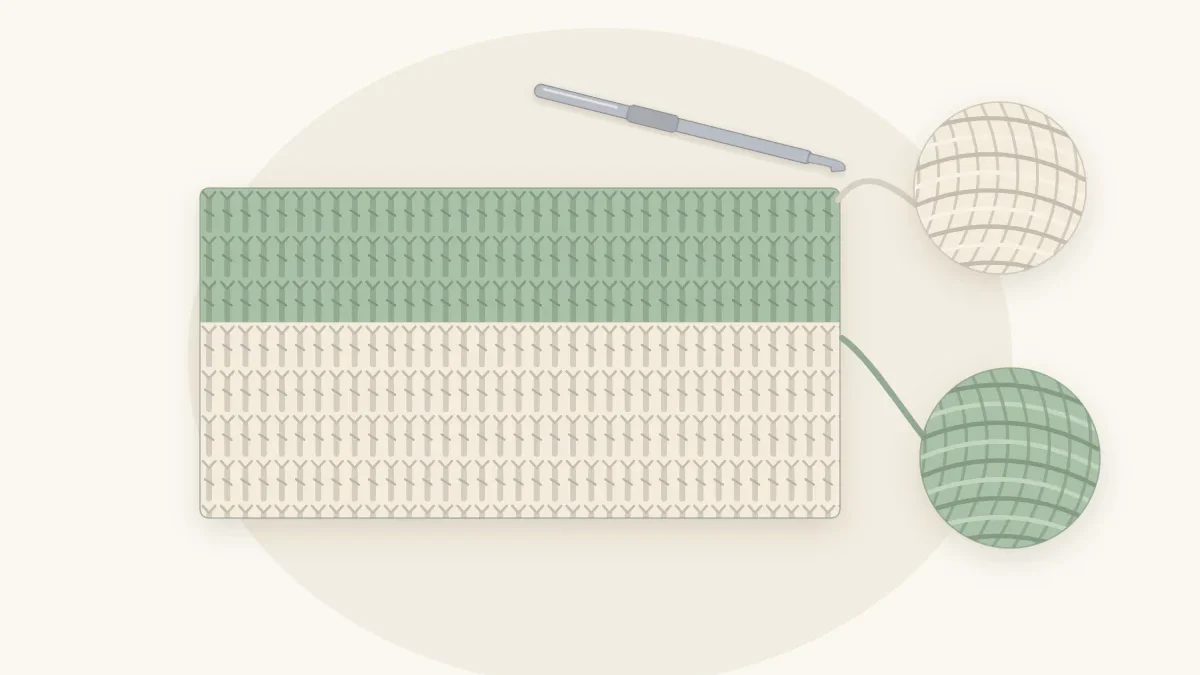
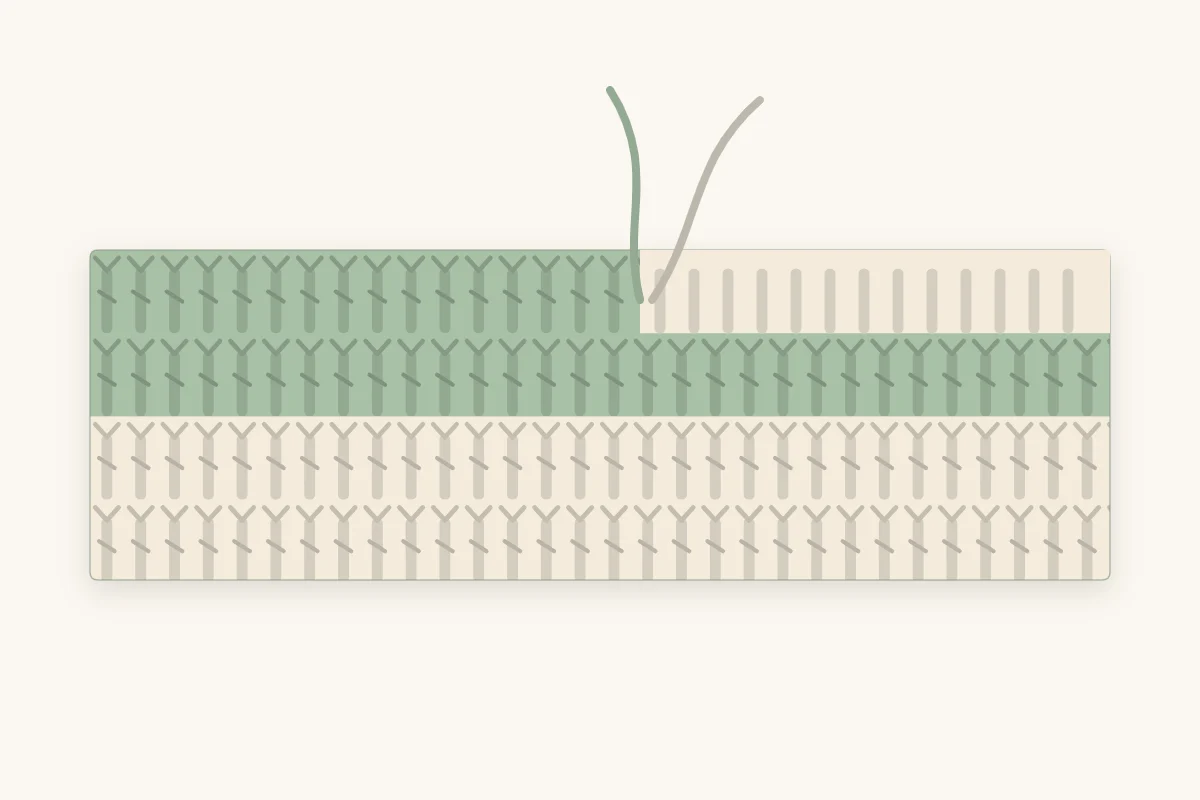
For horizontal stripes, the change happens in the last stitch of the row. Work across until one stitch remains, make that stitch up to its final yarn over, and complete it with the new color. Then make the turning chain in the new color and turn.
The turning chain is part of the new row, so it should match the new stripe. This is the detail that most often goes wrong: if the chain is made in the old color, a small dot of it shows at the edge of every stripe. The striped baby blanket pattern uses exactly this end-of-row change throughout.
Changing Color in the Middle of a Row
The same rule applies anywhere in a row. Complete the stitch before the change with the new color on its final yarn over, then continue.
The difference is what happens to the yarn you are not using. If the old color is needed again a few stitches later, lay it along the top of the row and work the new stitches over it so it is enclosed. If it is not needed again in that row, cut it and leave a tail.
Changing Color in Rounds
Granny squares and other pieces worked in rounds change color at the join. There are two reliable ways to do it.
- Change in the joining slip stitch. At the end of the round, insert the hook in the top of the beginning chain, yo with the new color and pull through both the stitch and the loop on the hook. The join is made in the new color and you chain up from there.
- Fasten off and rejoin in a corner. Join the round in the old color, cut the yarn and pull the tail through. Then insert the hook in any corner chain space, pull up a loop of the new color, and chain 3 to stand in for the first double crochet.
Both the classic granny square blanket and the granny stripe blanket rely on frequent changes like these.
Cut the Yarn or Carry It Up the Side
When a color will return soon, you can leave it attached and bring it up the edge instead of cutting it. This only works when the yarn is waiting at the edge where you need it, which means stripes with an even number of rows.
- Carry for narrow stripes, such as two colors alternating every 2 rows. The strand travels a short distance up the side.
- Cut for stripes of 4 rows or more, for odd row counts, and whenever three or more colors would leave strands spanning many rows.
To carry, pick up the waiting color from below when you reach it and complete the last stitch with it as usual. Let the strand lie flat along the edge without pulling. A tight strand shortens that side of the blanket; a slack one sticks out. A simple single crochet border worked over the edge encloses the carried strands completely, and a blanket with carried yarn needs one.
Tails, Tension and Knots
Leave tails of about 6 in (15 cm) on both the old and the new yarn. Shorter tails are difficult to thread and work loose more easily in the wash.
You can crochet over a tail to save time later: hold it along the top of the row and work the next 8 to 10 stitches around it. This holds the tail in place but does not lock it. Thread the remaining end onto a needle afterward and run it back in the opposite direction, as explained in how to weave in ends.
The first stitch after a change tends to be loose because nothing is anchoring the new yarn yet. After working two or three stitches, pull gently on both tails to snug the change stitch down to the size of its neighbors. Pull only until it matches; over-tightening puckers the edge.
Avoid tying the two yarns together. A knot makes a hard lump, can work its way to the right side, and may loosen over repeated washing. A properly woven tail holds better and lies flat.
Fixing a Jog or a Loose Edge Stitch
Two problems show up repeatedly at color changes.
- A loose, oversized edge stitch. Snug it with the tails, then weave the old tail down into its own stripe and the new tail into the new stripe. Weaving in opposite directions closes the gap between them.
- A visible step, or jog, where a round begins. Rounds do not stack level at the join. Moving the start of each new color to a different corner hides it.
Frequently asked questions
Can I change to a different brand or type of yarn for a stripe?
It works best when both yarns have the same weight, a similar fiber content and the same care instructions on the label. Yarns that differ in thickness make stripes of different widths and can ripple the edges. Yarns with different washing requirements may shrink or stretch unevenly once the blanket is laundered.
How many ends will a striped blanket have?
Each time you cut and rejoin, you create two tails: one from the old color and one from the new. A blanket with 20 stripes that are all cut has 19 color changes, so 38 tails, plus the starting and finishing ends for 40 in all. Carrying yarn on narrow stripes reduces that number considerably.
Why does the old color show through when I crochet over the tail?
Stitches do not fully cover a strand of a strongly contrasting color, especially tall or open stitches. Enclose each tail under stitches of its own color where you can. If a dark tail must travel under a light stripe, weave it with a needle into the dark stripe below instead.