9 Beginner Baby Blanket Mistakes and How to Fix Them
Nine common problems in a first crochet baby blanket, each with the sign to look for, the cause, the fix and a plain answer on whether to rip back.
Tutorial at a glance
Materials
- Locking stitch markers
- Tape measure
- Blunt yarn needle
- A hook one size larger than your main hook
Most problems in a first blanket come from a short list of causes, and nearly all of them show up early if you know what to look for. The nine beginner baby blanket mistakes below are listed with the sign to watch for, the reason it happens, the fix, and an honest note on whether it is worth pulling the work back.
Pulling out stitches, often called ripping back, is a normal part of crochet, and the yarn can be reused.
1. Edges That Grow or Shrink
How to recognize it: the sides slant inward, flare outward or wobble in steps instead of running parallel.
Cause: the stitch count is changing. Either you are miscounting at the row ends or the turning chain is being treated the wrong way. A chain that counts as a stitch needs a stitch worked into it at the end of the next row. A chain that does not count must be left alone.
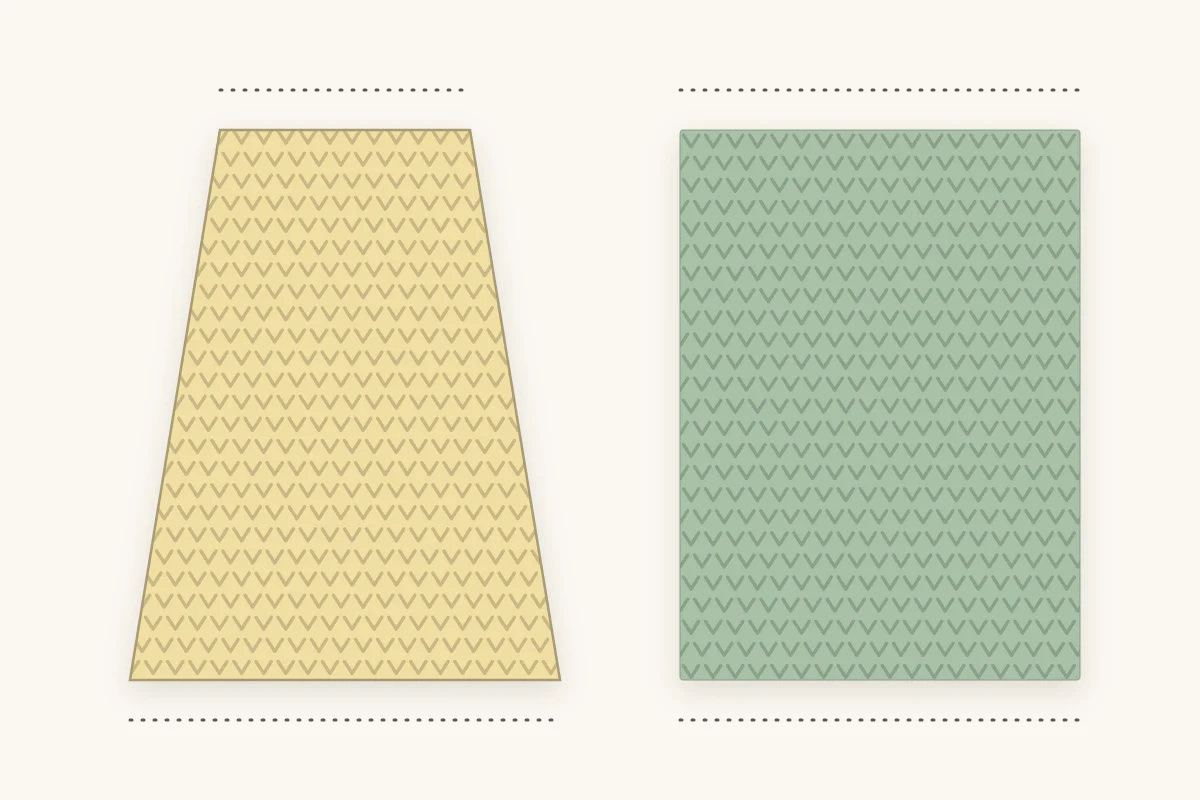
Fix: read the pattern note on the turning chain, mark the first stitch of every row and count every few rows. Rip back to the last row with the correct count. This one is worth redoing, because a border cannot hide a slanted side.
2. A Foundation Chain That Is Too Tight
How to recognize it: the bottom edge is narrower than the rest and the blanket curves like a fan.
Cause: chains have less give than stitches, and most beginners pull them snug.
Fix: make the chain with a hook one size larger than the one used for the rows, then switch back. Before working Row 1, lay the chain flat and compare it with your planned width, as described in the guide to how many chains to start a baby blanket. If the curve is clear after a few rows, start over. Blocking will not stretch a tight chain enough.
3. Skipping the Gauge Swatch
How to recognize it: the blanket is turning out much wider or narrower than the pattern says, or the yarn is disappearing faster than expected.
Cause: your stitches are a different size from the pattern’s. A difference of half a stitch per inch adds up to several inches across a full row.
Fix: make a 6 in (15 cm) swatch, measure it and change hook size until you match the target. The steps are in the guide to crochet gauge for blankets. If you are well into the blanket and the size is acceptable, keep going.
4. Running Out of Yarn or Mixing Dye Lots
How to recognize it: the last ball runs out before the blanket reaches its length, or a new ball makes a faint band of a slightly different shade.
Cause: yarn amounts in patterns are estimates, and yarn dyed in separate batches can differ even when the color name matches. The batch is printed on the label as the dye lot number.
Fix: work out your needs before buying with the method in how much yarn you need for a baby blanket, and buy one extra ball from the same lot. If a shade change is already in the fabric, you can turn it into a deliberate stripe or use the odd ball for the border.
5. A Twisted Chain or the Wrong Loop
How to recognize it: the first row spirals around the chain, or a horizontal ridge runs across some rows and not others.
Cause: a foundation chain has a smooth front made of V shapes and a row of bumps on the back. Working into different parts of the chain along the row twists it. In later rows, catching only one of the two top loops of a stitch leaves the other loop sitting on the surface as a line.
Fix: keep the Vs facing you and insert the hook the same way into every chain. In the rows, go under both top loops unless the pattern says otherwise. A twisted first row is worth redoing at once. A single row worked in one loop is cosmetic, so that is your choice.
6. Tension That Changes
How to recognize it: the blanket has wider and narrower bands even though the stitch count is right.
Cause: stitches loosen as your hands relax and tighten when you are tired or tense, and a long break can shift your gauge.
Fix: measure the width every few inches of length. Hold the yarn the same way each session, and work a few rows on your swatch to warm up after a break. Mild variation evens out with blocking. A band that is an inch or more off needs to be redone.
7. Ends Cut Too Short
How to recognize it: tails poke out of the fabric after washing, or a join starts to open.
Cause: a tail of an inch or two cannot be worked through enough stitches to hold.
Fix: leave about 6 in (15 cm) every time you start or finish a ball, and run each tail in several directions as shown in the guide to weaving in ends. For a tail that is already too short, pass the needle through the stitches first, then thread the tail into the eye and pull it through.
8. A Ruffled or Puckered Border
How to recognize it: the border waves like a frill, or it pulls the edges in so the center of the blanket bulges.
Cause: a ruffle means too many border stitches for the length of the edge. Puckering means too few. The sides are the usual trouble spot, because row ends have no clear stitches to work into.
Fix: rip out the border round only and respace it. A common starting point along the sides is 1 single crochet per single crochet row and about 2 per double crochet row, with 3 in each corner. Borders are quick to redo, and the blanket body is not affected.
9. Skipping Blocking
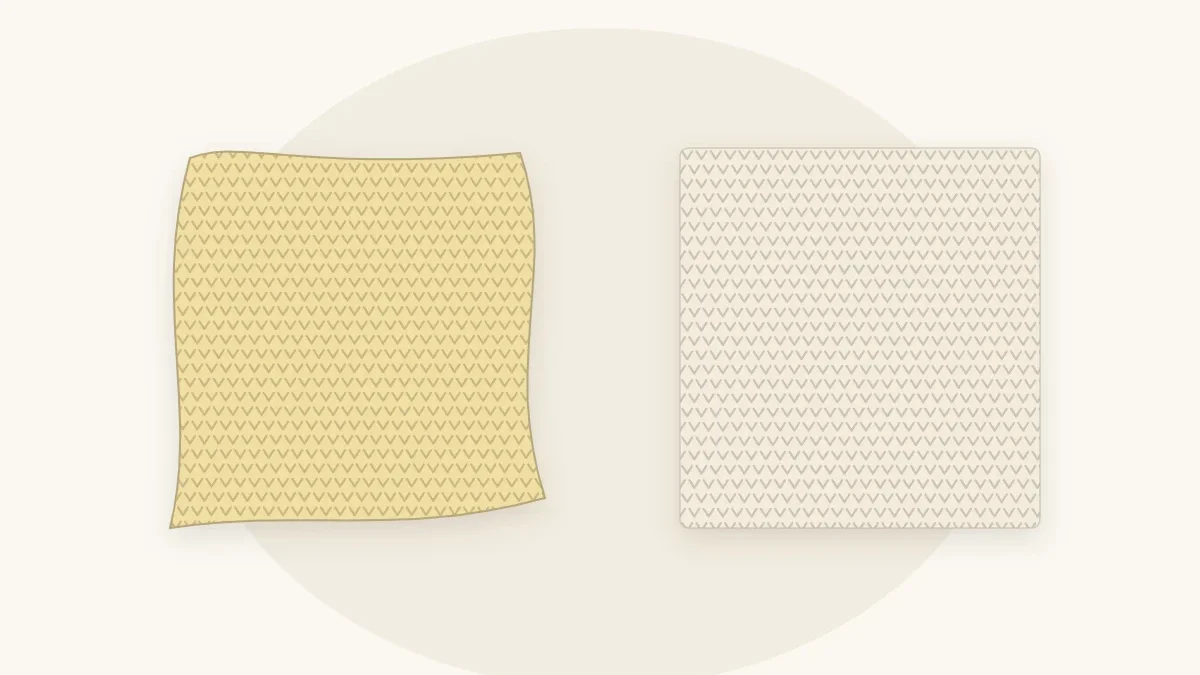
How to recognize it: the finished blanket has curling corners, slightly uneven stitches or edges that do not quite lie straight.
Cause: fabric straight off the hook still holds the shape of how it was handled. Blocking means dampening or washing it, shaping it flat to its measurements and letting it dry.
Fix: follow the guide to blocking a crochet baby blanket, using a method the care label allows. It smooths small irregularities and squares the corners. It does not correct a wrong stitch count or a tight foundation chain.
Tip
When deciding whether to rip back, ask whether the flaw changes the shape or only the surface. Shape problems grow with every row. Surface problems stay the size they are.
Frequently asked questions
Is it bad to rip out crochet stitches and reuse the yarn?
No. Pulling out stitches is routine, and most yarns can be crocheted again right away. Yarn that has been worked for a long time may look kinked. Winding it loosely into a ball and letting it rest usually relaxes it enough. Fuzzy or loosely spun yarns can fray if ripped repeatedly, so undo those gently.
How often should I count my stitches?
Count the first few rows every time, since that is when the turning chain habit forms. After that, counting every four or five rows is a practical rhythm for a plain blanket. A stitch marker in the first stitch of each row reduces how often a count turns up a surprise.
Can a border fix uneven blanket edges?
A border covers small irregularities, such as row ends that look a little loose or slightly different in height. It cannot straighten a side that slants because stitches were lost or gained. The border follows the edge it is given, so a blanket that narrows by an inch will still narrow by an inch with a border on it.