How to Choose Yarn for a Crochet Baby Blanket
Compare acrylic, cotton, blends, superwash wool and bamboo-viscose yarn, learn the three yarn weights most blanket patterns use, and read a yarn label for care, yardage and dye lot before you buy.
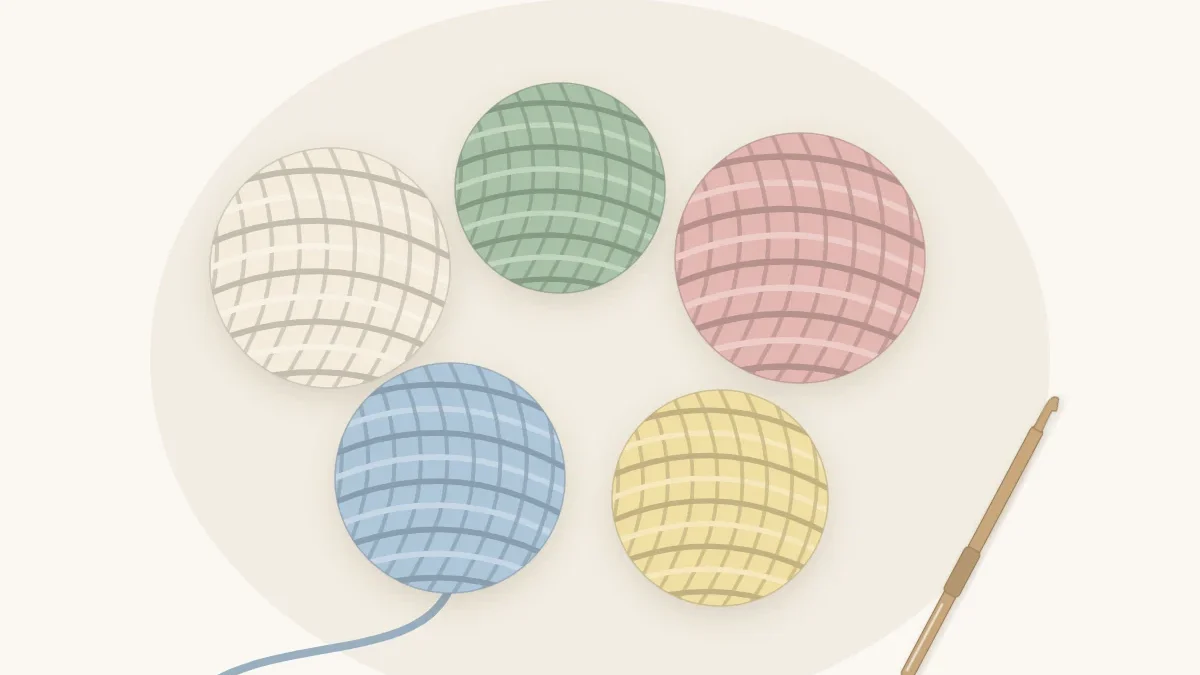
The best yarn for baby blankets is not one particular product. It is the yarn whose fiber, thickness and care instructions fit the blanket you plan to make and the way it will be laundered. All of that information is printed on the label, once you know where to look.
Start With the Care Label
A baby blanket is washed far more often than a scarf or a wall hanging, so the care instructions deserve the first look. Some yarns are labeled for machine washing and tumble drying, some for a gentle cycle and flat drying, and some for hand washing only. None of this can be judged by touch. It comes from the label.
The family receiving the blanket may also have preferences about fiber or laundering. If you can ask, ask before you buy. If the blanket is a surprise, a yarn with simple care instructions is the more flexible choice, and it helps to keep one label to pass along with the gift.
Fiber Types and Their Trade-Offs
Fiber content decides how the fabric hangs, how clearly the stitches show and how the blanket holds up to washing. The table gives a general picture. Individual yarns differ, so treat the label as the final word.
| Fiber | Typical fabric | Things to watch |
|---|---|---|
| Acrylic | Light for its bulk, holds its shape, clear stitches in smooth yarns | Can pill with wear; high heat can flatten it permanently |
| Cotton | Heavier, good drape, crisp stitch definition, little stretch | A large blanket gets heavy; loosely twisted cotton splits; slow to dry |
| Cotton blends | Lighter and a bit springier than pure cotton | Behavior depends on the blend, so read the percentages |
| Superwash wool | Warm, elastic, even stitches | Can stretch when wet; drying instructions vary; some families prefer not to use wool |
| Bamboo-viscose blends | Very fluid drape with a slight sheen | Slippery on the hook, splits easily, can grow in length, often needs gentler washing |
Acrylic is the most common choice for a first blanket because it is widely available, comes in many colors, and is often labeled for machine washing and drying. Quality varies a great deal, so compare a few yarns by hand. A smooth, firmly twisted acrylic shows stitches clearly and is easy to rip back.
Cotton and cotton blends make a cooler, heavier fabric with sharp stitch definition. Cotton has almost no stretch, which keeps a blanket from sagging but also makes uneven tension more visible. A cotton-acrylic blend reduces the weight and adds a little give.
Yarn Weight and Hook Size
Yarn weight means the thickness of the strand, not how heavy the ball is. US labels use a standard numbered system from 0 to 7. Most baby blanket patterns sit in three of those categories.
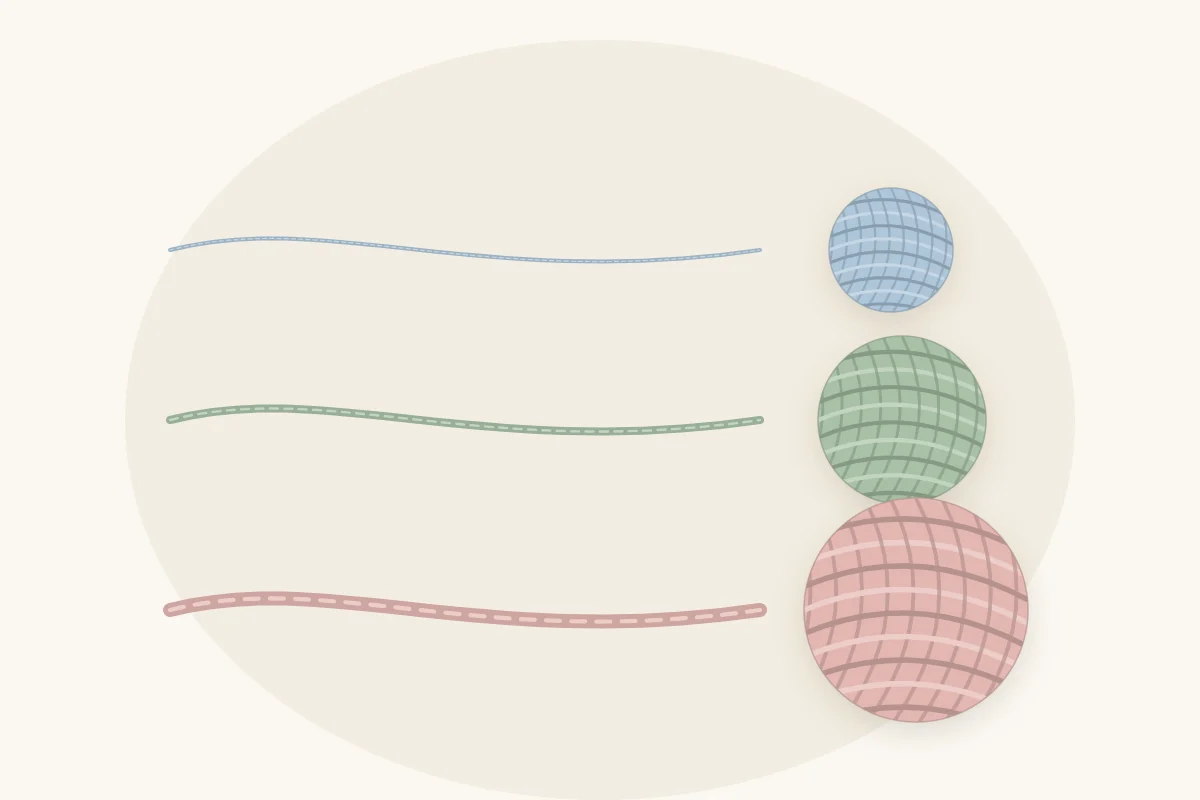
| Weight | Hook range often printed on the label | What it makes |
|---|---|---|
| #3 light (DK) | US 7 to I-9 (4.5 to 5.5 mm) | A thinner, lighter blanket with more stitches per inch |
| #4 medium (worsted) | US I-9 to K-10.5 (5.5 to 6.5 mm) | A mid-thickness fabric with stitches that are easy to see |
| #5 bulky | US K-10.5 to M-13 (6.5 to 9 mm) | A thick, heavy blanket that grows quickly |
The hook on the label is a starting point, not a rule. Many blanket patterns pair worsted weight yarn with a US H-8 (5 mm) hook, slightly smaller than the label range, to get a firmer fabric. A swatch tells you whether the combination gives the fabric you want; the guide to measuring crochet gauge shows how to make one.
Worsted weight (#4 medium) is the usual recommendation for a first blanket. The stitches are large enough to count and the fabric builds at a steady pace. Light yarn suits open designs such as the V-stitch summer blanket, and bulky yarn suits dense ones such as the bulky winter blanket.
How to Read a Yarn Label
Labels differ in layout but carry the same core information.
- Weight symbol: a small skein icon with a number from 0 to 7 inside it.
- Fiber content: listed in percentages, for example 60% cotton, 40% acrylic.
- Yardage and weight: the length in yards and meters and the weight of the ball in ounces and grams. Yardage is the number you shop by, because two balls of the same weight can hold very different lengths.
- Suggested hook and gauge: a hook size and the number of stitches and rows expected over 4 in (10 cm).
- Care symbols: a washtub for washing, a square for drying, an iron for ironing and a triangle for bleach. A cross through a symbol means do not.
- Color and dye lot: a color name or number, plus a separate lot number for the dye batch.
Color and Stitch Visibility
Color affects how easy the work is, not only how it looks. In a light or medium solid color, each stitch casts a small shadow and the top loops are easy to find. That makes counting and spotting mistakes much simpler.
Dark shades such as navy or charcoal hide those shadows, so it becomes hard to tell where the hook should go. Variegated yarn, which changes color along its length, disguises stitches in a different way and also blurs textured stitch patterns. Fuzzy and brushed yarns do the same and are difficult to rip back. For a first blanket, a smooth yarn in a light solid color removes one source of frustration.
Buying Enough From One Dye Lot
Yarn is dyed in batches, and each batch gets its own lot number. Two balls with the same color name but different lot numbers can differ slightly in shade. The difference is often invisible in the store and obvious as a stripe across a finished blanket.
Buy all the yarn for a project at once and check that every ball carries the same lot number. As a rough guide, a 30 x 35 in (76 x 89 cm) blanket in worsted weight and a plain stitch takes about 900-1,100 yd. That is an estimate that depends on your gauge and stitch, so buy one ball more than the calculation suggests. The article on how much yarn a baby blanket needs walks through a more exact method based on a swatch.
Watch out
Do not compare yarns by ball weight alone. A 100 g ball of cotton usually holds fewer yards than a 100 g ball of acrylic of the same thickness, because cotton is the denser fiber. Add up yards, not grams.
Frequently asked questions
Is acrylic or cotton better for a crochet baby blanket?
Neither is better in every case. Acrylic usually makes a lighter blanket and is often labeled for machine washing and drying. Cotton makes a heavier fabric with sharper stitches and very little stretch. Compare the care instructions on both labels and consider what the family who will launder the blanket prefers.
Can I use a different yarn weight than the pattern calls for?
You can, but the blanket will not come out the stated size and the yarn amount will change. A thinner yarn gives a smaller, lighter blanket from the same stitch count, and a thicker yarn gives a larger one. Make a swatch, measure it, and recalculate the starting chain for the width you want.
What should I do if the store does not have enough yarn in one dye lot?
The simplest answer is to choose a different color that is in stock in one lot. If you must mix lots, use the odd balls for a border or for evenly spaced stripes, where a small shade difference reads as a design choice instead of an accidental band across the fabric.