How to Crochet the Waffle Stitch for a Baby Blanket
A step-by-step lesson in the front post double crochet and the two-row waffle stitch, followed by a 30 x 34 in baby blanket pattern with the stitch counts checked for every row.
Tutorial at a glance
Materials
- Worsted weight (#4 medium) yarn, about 1,300-1,600 yd
- US I-9 (5.5 mm) crochet hook
- Blunt yarn needle
- Scissors and tape measure
- Locking stitch marker
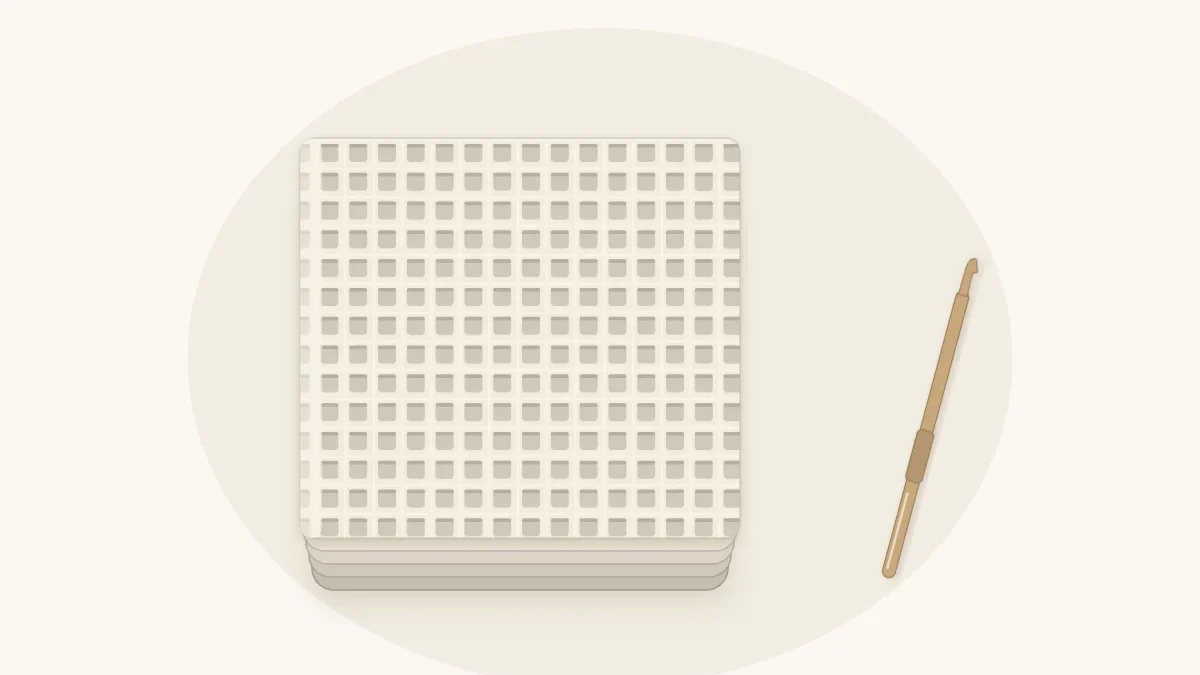
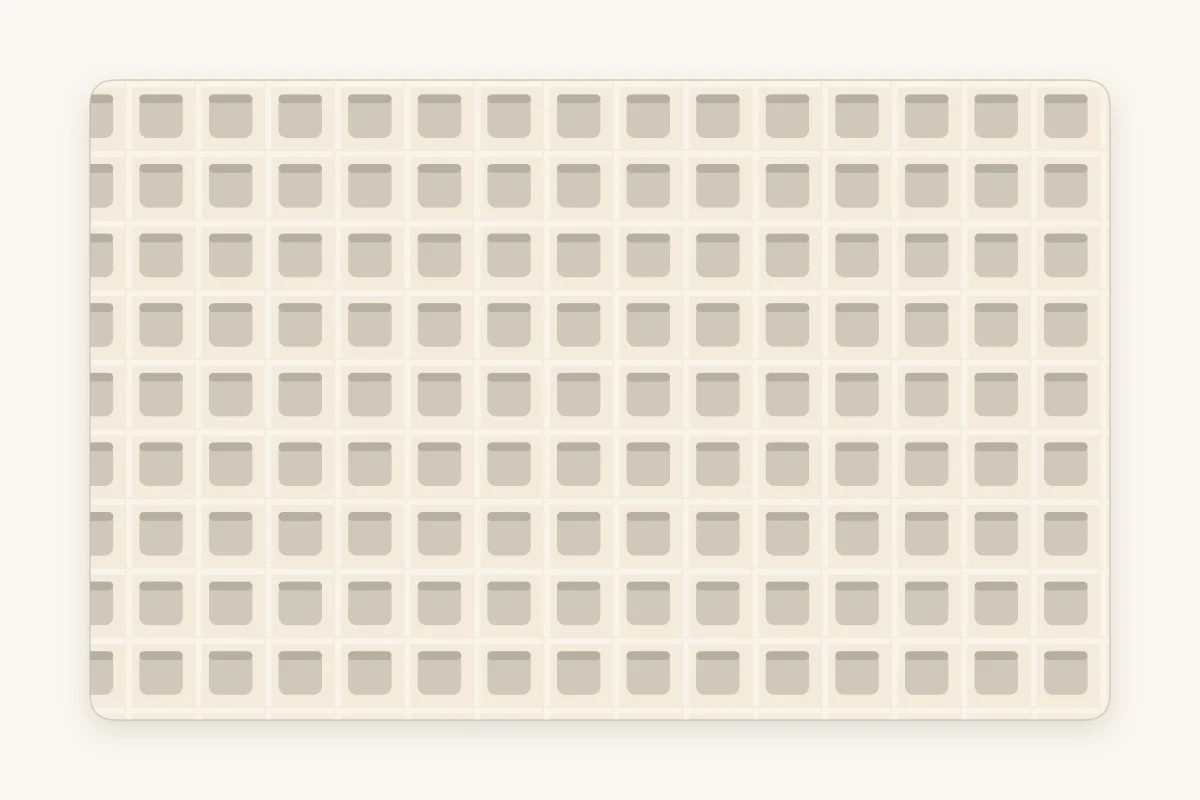
The waffle stitch is plain double crochet with one addition: some stitches are worked around the post of the stitch below instead of into its top. Those post stitches stand forward from the surface and, over two alternating rows, form a raised grid with small recessed squares. This waffle stitch baby blanket is a two-row repeat once the setup row is done.
The fabric is thick and firm. It uses noticeably more yarn than plain double crochet and pulls in narrower, so a swatch is not optional here. The pattern is rated intermediate only because of the post stitch; every other step is the same as in a simple double crochet blanket.
How to Work a Front Post Double Crochet
The post is the upright body of a stitch. A front post double crochet (FPdc) wraps around that post instead of going under the two loops at the top.
- Yarn over.
- Insert the hook from the front of the work to the back on the right side of the post, then bring it to the front again on the left side, so the post lies across the hook. Left-handed crocheters go in on the left and come out on the right.
- Yarn over and pull up a loop behind the post. There are 3 loops on the hook.
- Yarn over and pull through 2 loops, then yarn over and pull through the last 2.
Pull the first loop up to the height of the neighboring stitches. A short loop makes the row pucker. The top of the stitch you worked around stays unused and sits behind the new stitch.
How the Waffle Grid Forms
Think of the stitches as columns in groups of three. In Row 2, the first column of each group is an FPdc and the other two are plain. Those post stitches build the vertical lines of the grid on the side facing you.
Row 3 is worked from the other side and reverses the choice: a plain dc in the column that had the post stitch, and an FPdc around each of the two plain ones. Post stitches made on the back push the tops of the stitches below toward the front, which forms the horizontal bars. Together the two rows close each little square.
Materials
- Worsted weight (#4 medium) yarn, about 1,300-1,600 yd (1,190-1,465 m)
- US I-9 (5.5 mm) crochet hook
- Blunt yarn needle
- Scissors and a tape measure
- Locking stitch marker for the turning chain
The yardage is an estimate that depends on gauge, and this stitch is hungry. Buy extra from the same dye lot. A swatch also lets you estimate the yarn more closely.
Finished Size and Gauge
About 30 x 34 in (76 x 86 cm) before any border.
Gauge target: 14 stitches and 12 rows = 4 in (10 cm), measured over the waffle pattern, not over plain double crochet. Matching it matters for size and yarn amount. For a swatch, chain 23 (21 stitches) and work at least 14 rows before you measure the gauge in the middle.
The pattern needs a multiple of 3 stitches, and the starting chain is that number plus 2. At 3.5 stitches per inch, 30 in needs 3.5 x 30 = 105 stitches, which is 3 x 35. Add 2 for the turn: 107 chains.
Watch out
Row 1 is plain double crochet and will look several inches wider than the target. The fabric draws in once the post stitches begin, so judge the width after six or more rows, not from the first row or the chain.
Abbreviations and Pattern Notes
- ch = chain; st(s) = stitch(es); dc = double crochet; FPdc = front post double crochet
- This pattern uses US crochet terms.
- The ch 3 at the start of every row counts as the first dc. Do not work into the stitch at its base.
- The last stitch of every row is a plain dc in the top of the turning chain from the row below.
- Every row has 105 stitches. The first and last columns are always plain dc, which gives a flat edge.
Instructions
Ch 107.
Row 1: Dc in 4th ch from hook (the skipped chains count as the first dc) and in each ch across. (105 sts)
Row 2: Ch 3, turn, *FPdc around next st, dc in each of next 2 sts; repeat from * to last 2 sts, FPdc around next st, dc in top of turning ch. (35 FPdc)
Row 3: Ch 3, turn, *dc in next st, FPdc around each of next 2 sts; repeat from * to last 2 sts, dc in next st, dc in top of turning ch. (68 FPdc)
Repeat Rows 2 and 3 until the blanket measures about 34 in (86 cm), ending after a Row 3 so the last row of squares is closed. At the target gauge that is about 101 rows.
Two checks keep the grid lined up. In Row 3, each plain dc after the turning chain goes into the top of an FPdc from Row 2; that top sits slightly back and is easy to skip. In Row 2 repeats, each FPdc goes around the plain dc that stands between two pairs of post stitches. If a vertical ridge steps sideways, a stitch was skipped or added in that row.
Tip
Count the ridges instead of all 105 stitches. Each Row 2 has 35 single post stitches, and each Row 3 has 34 pairs. A quick count of the pairs every few rows catches a lost stitch early.
Finishing
Fasten off and weave in the ends. The thick fabric hides tails well: run each one along the back of a ridge, then back the other way.
Waffle fabric rarely needs heavy blocking, and pressing would flatten the grid. If the corners need squaring, pin the blanket to size and mist it lightly, following the care label. A round or two of single crochet makes a flat simple border; because the fabric is dense, place the border stitches a little farther apart along the sides if the edge starts to ruffle.
Frequently asked questions
How many chains do I need for the waffle stitch?
Chain a multiple of 3, plus 2. The first double crochet goes into the fourth chain from the hook and the skipped chains count as a stitch, so the row ends up with a multiple of 3 stitches. Examples: 23 chains for a 21-stitch swatch, or 107 chains for the 105-stitch blanket.
Why does my waffle stitch blanket get narrower after the first row?
That is how the stitch behaves. Post stitches draw the columns together, so the waffle rows are narrower than the plain double crochet setup row. Work several rows before judging the width, and base the starting chain on a gauge swatch made in the waffle pattern itself.
Does the waffle stitch look the same on both sides?
No. The side that faces you while you work Row 2 shows the deep grid of squares. The other side is flatter, with rows of short horizontal bars. Both are tidy, but the grid side is usually treated as the front, so it helps to mark it with a stitch marker early on.